- Call: +1 850 633 2663

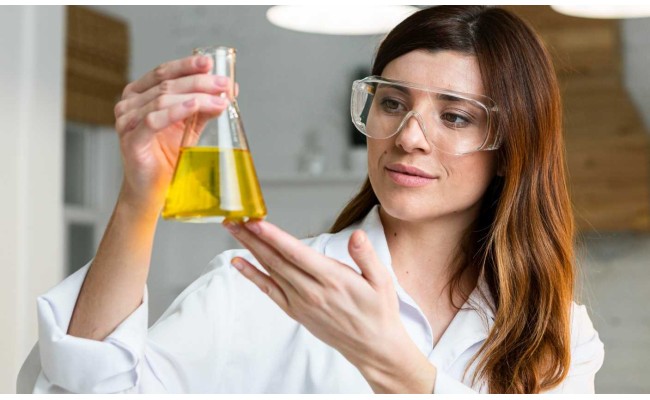
Innovative specialty additives are revolutionizing advanced polymer formulation, marking a significant evolution from traditional compounds. These novel additives enhance material performance, catering to specialized industrial requirements in challenging environments. Key developments include bio-based and sustainable additives, aligning with environmental sustainability goals. These alternatives offer impressive performance while reducing environmental impact. Nanotechnology plays a crucial role, introducing nanoparticles that significantly improve mechanical strength, thermal stability, and electrical conductivity. This is vital in industries like aerospace, automotive, and electronics, where materials face extreme conditions. Smart additives have emerged, enabling polymers to respond to environmental changes, such as temperature or light, expanding their applications. The field also sees a rise in application-specific additives, tailored for sectors like biomedicine and electronics. These additives ensure biocompatibility for medical applications or enhanced electrical properties for electronic uses. Formulation strategies are essential, focusing on compatibility and balancing additive concentration with polymer properties. Overall, these innovative additives are pushing the boundaries of polymer science, enabling the creation of materials with unprecedented capabilities and applications across diverse industries.
Don’t just keep up—lead the way. This training is your ticket to becoming a go-to expert in advanced polymer formulations and sustainability;
1. Unlock the Secrets of Smarter Polymers: Learn how specialty additives are transforming materials—making them stronger, lighter, and greener. It’s like giving your products a superpower!
2. Fix What’s Broken, Fast: Get practical solutions to common formulation headaches. Save time, cut costs, and make your products stand out in a crowded market.
3. Be the Go-To Expert in Your Field: Gain insider knowledge that sets you apart. Whether it’s creating cutting-edge formulations or meeting sustainability goals, you’ll leave with skills that make you indispensable.
4. See the Future of Polymers—Before Everyone Else: Get a sneak peek into the latest trends and technologies shaping the industry. Don’t just adapt to change—drive it.
This is highly recommended and must have training for chemical industry professionals engaged in diverse polymer application/formulation areas; in particular:
- R&D chemists, formulators, Engineers, Q&A
- Technical managers
- Lab managers
- Engineers, technicians, and supervisors
- Product development teams and R&D managers

The OnlyTRAININGS experts team is a powerhouse of industry professionals committed to advancing knowledge and solving complex challenges. Comprising specialists from diverse fields including chemical engineering, automotive, artificial intelligence, consumer electronics, energy solutions, sustainability, circular economy, polymer science, cosmetics industry, information technology, regulatory affairs and more, our team brings unparalleled expertise. With deep knowledge in polymer science, material science, coatings technology, cosmetic formulations, adhesives and sealants, and industry regulations, we offer a unique blend of experience and skill sets. Driven by a passion for innovation and rigorous research, our team is dedicated to making a tangible impact. We thrive on tackling new challenges, exploring growth opportunities, and pushing the boundaries of what’s possible. By staying at the forefront of industry developments and emerging technologies, we ensure that professionals can apply cutting-edge skills and insights to their day-to-day work. At OnlyTRAININGS, we pride ourselves on delivering world-class, instructor-led technical training. Backed by our expert team, we provide comprehensive, hands-on learning experiences designed to elevate your skills and expertise. Whether you're looking to master new technologies, solve complex problems, or stay ahead in your field, OnlyTRAININGS is your partner in professional growth.
Further areas you will be able to explore after this training: speciality additives, biomedical, electronics, advanced polymers science, polymer properties, basic principles, characterization, polymer additives, rheology modifiers, polymer compatibility thermal analysis, polymer morphology analysis and many more....
Join 100,000+ chemical industry professionals from 5000+ companies worldwide who trust OnlyTRAININGS for industry-leading expertise.

 OnlyTRAININGS Expert Team
 OnlyTRAININGS Expert Team
OnlyTRAININGS Expert Team
OnlyTRAININGS Expert Team
5 reviews