
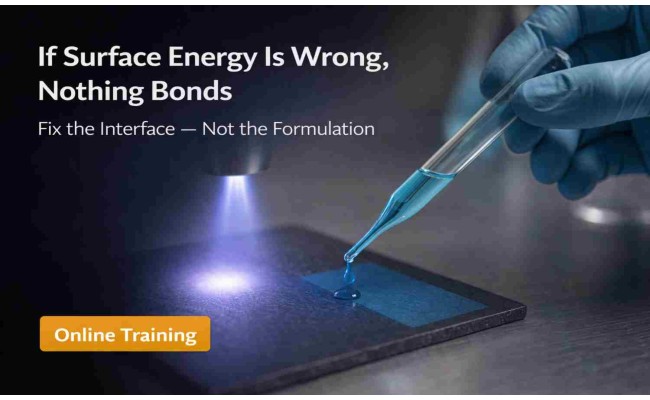
What if the real barrier to stopping plasticizer migration is not the formulation but the surface itself? In flexible PVC, TPEs, polyolefins, medical devices, and packaging materials, plasticizer migration shows up as bloom, tack, odor, and long-term property loss. Most failures begin at the interface where surface energy, diffusion pathways, and chemical compatibility determine how easily low molecular weight plasticizers escape. Effective control starts with understanding thermodynamic drivers, Fick’s diffusion behavior, and solubility parameter mismatches. Once the root cause is clear, targeted surface engineering becomes the key. Corona and plasma treatments, silane grafting, reactive compatibilizers, nanocoatings, ALD and PVD thin films, UV or EB cured layers, and nanocomposite surfaces create stronger barriers and reduce migration significantly. Advanced solutions also include high affinity polymeric plasticizers, surface active additives, fluoropolymer modifiers, and multilayer structures using EVOH, PVDC, or polyamide barriers. Using analytical tools like contact angle testing, FTIR ATR, extraction studies, and migration modeling helps verify performance. Surface modification is one of the most powerful ways to inhibit plasticizer migration and extend material durability..
This must have online training offers a multitude of compelling reasons.
1. Fix Migration Problems at the Source: Learn what actually drives plasticizer movement and how to stop it early.
2. Surface Changes Everything: See how simple surface tweaks dramatically cut bloom and tack issues.
3. No More Guesswork: Get clear, proven methods that reduce migration without endless formulation trials.
4. Barriers That Really Work: Discover coating and grafting approaches that outperform additive-only solutions.
5. Solutions You Can Use Tomorrow: Walk away with practical ideas you can apply immediately in your formulations.
This is highly recommended and must have training for chemical industry professionals engaged in diverse polymer application/formulation areas; in particular:
- Polymer and Plastic Formulators
- R&D and Product Development Chemists
- Packaging Technologists and Material Engineers
- Medical Device Material Specialists
- Automotive Interior and Wire & Cable Engineers
- Quality, Regulatory, and Compliance Professionals
- Coating, Surface Treatment, and Process Engineers
- Technical Managers and Application Engineers

The OnlyTRAININGS experts team is a powerhouse of industry professionals committed to advancing knowledge and solving complex challenges. Comprising specialists from diverse fields including chemical engineering, automotive, artificial intelligence, consumer electronics, energy solutions, sustainability, circular economy, polymer science, cosmetics industry, information technology, regulatory affairs and more, our team brings unparalleled expertise. With deep knowledge in polymer science, material science, coatings technology, cosmetic formulations, adhesives and sealants, and industry regulations, we offer a unique blend of experience and skill sets. Driven by a passion for innovation and rigorous research, our team is dedicated to making a tangible impact. We thrive on tackling new challenges, exploring growth opportunities, and pushing the boundaries of what’s possible. By staying at the forefront of industry developments and emerging technologies, we ensure that professionals can apply cutting-edge skills and insights to their day-to-day work. At OnlyTRAININGS, we pride ourselves on delivering world-class, instructor-led technical training. Backed by our expert team, we provide comprehensive, hands-on learning experiences designed to elevate your skills and expertise. Whether you're looking to master new technologies, solve complex problems, or stay ahead in your field, OnlyTRAININGS is your partner in professional growth.
Further areas you will be able to explore after this training: plasticizer migration, surface modification, polymer formulation, plasticizer leaching, PVC stabilization, material science, formulation training, polymer additives, migration inhibition, flexible PVC, product failure, durability, material degradation, plasticizer alternatives, formulation science and many more....
Join 100,000+ chemical industry professionals from 5000+ companies worldwide who trust OnlyTRAININGS for industry-leading expertise.
 OnlyTRAININGS Expert Team
 OnlyTRAININGS Expert Team
 OnlyTRAININGS Expert Team
6 reviews