
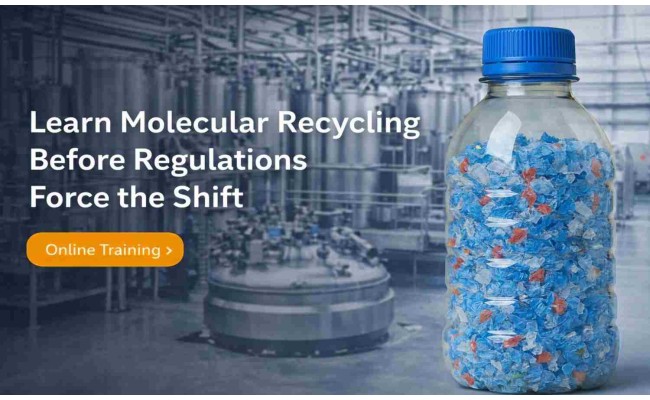
Molecular recycling is emerging as a critical pathway for converting mixed and contaminated plastic waste into feedstocks for the chemical industry, but technical and economic viability depends on process selection, feedstock control, and product quality management. This training focuses on advanced chemical recycling routes including pyrolysis, depolymerization, gasification, and emerging catalytic and AI-optimized systems. Participants will learn how feedstock composition, contamination levels, and polymer variability influence yield, product distribution, and downstream upgrading requirements. The session examines key challenges such as energy intensity, reactor stability, char formation, and purification constraints that determine whether recycling operations become profitable or remain pilot-scale experiments. Special attention is given to techno-economic considerations, integration with existing refinery or chemical assets, and strategies for producing high-value chemicals, fuels, or circular polymer feedstocks. Regulatory drivers, ESG expectations, and realistic circular economy claims are addressed from a commercial feasibility perspective. Training is designed for professionals evaluating molecular recycling as a strategic technology and provides practical decision frameworks to move from sustainability ambition to industrial implementation.
Discover how molecular recycling can revolutionize your operations, meet sustainability targets, and drive profitability. Attend this training and you will;
1. Understand where molecular recycling is truly economically viable: Learn the yield, energy, and purity thresholds that determine commercial success.
2. Manage feedstock variability without destroying process stability: Identify contamination, polymer mix, and sorting limits that impact product quality.
3. Avoid scale-up failures seen in many pilot-to-plant transitions: Understand reactor fouling, char formation, and thermal control risks.
4. Identify the most profitable product pathways, not just technical outputs: Compare fuels, monomers, and chemical intermediates based on real market value.
5. Evaluate technology options with decision-grade criteria: Assess pyrolysis, depolymerization, and gasification based on integration and ROI.
This training is designed for professionals and organizations across the chemical industry, OEMs, who are actively seeking innovative, sustainable solutions to participate in green economy ecosystem. Specifically, it is ideal for:
- R&D chemists, formulators, Engineers
- Process and Manufacturing Engineers
- Sustainability and Environmental Specialists
- Innovation Managers and Strategists
- OEM Design and Development Teams
- Operations and Supply Chain Managers
- Business Development Professionals

The OnlyTRAININGS experts team is a powerhouse of industry professionals committed to advancing knowledge and solving complex challenges. Comprising specialists from diverse fields including chemical engineering, automotive, artificial intelligence, consumer electronics, energy solutions, sustainability, circular economy, polymer science, cosmetics industry, information technology, regulatory affairs and more, our team brings unparalleled expertise. With deep knowledge in polymer science, material science, coatings technology, cosmetic formulations, adhesives and sealants, and industry regulations, we offer a unique blend of experience and skill sets. Driven by a passion for innovation and rigorous research, our team is dedicated to making a tangible impact. We thrive on tackling new challenges, exploring growth opportunities, and pushing the boundaries of what’s possible. By staying at the forefront of industry developments and emerging technologies, we ensure that professionals can apply cutting-edge skills and insights to their day-to-day work. At OnlyTRAININGS, we pride ourselves on delivering world-class, instructor-led technical training. Backed by our expert team, we provide comprehensive, hands-on learning experiences designed to elevate your skills and expertise. Whether you're looking to master new technologies, solve complex problems, or stay ahead in your field, OnlyTRAININGS is your partner in professional growth.
Further areas you will be able to explore after this training: molecular recycling, chemical recycling plastics, plastic pyrolysis technology, polymer depolymerization, waste to chemicals, circular economy plastics, advanced recycling technologies, plastic waste valorization, mixed plastic recycling, chemical recycling economics, plastic feedstock conversion, circular polymer feedstocks, pyrolysis oil upgrading, sustainable chemical manufacturing, plastic to monomer technology and much more....
Join 100,000+ chemical industry professionals from 5000+ companies worldwide who trust OnlyTRAININGS for industry-leading expertise.
 OnlyTRAININGS Expert Team
 OnlyTRAININGS Expert Team
 OnlyTRAININGS Expert Team
5 reviews